Loading...
Serving Trenton, NJ and surrounding areas. (609) 913-9756
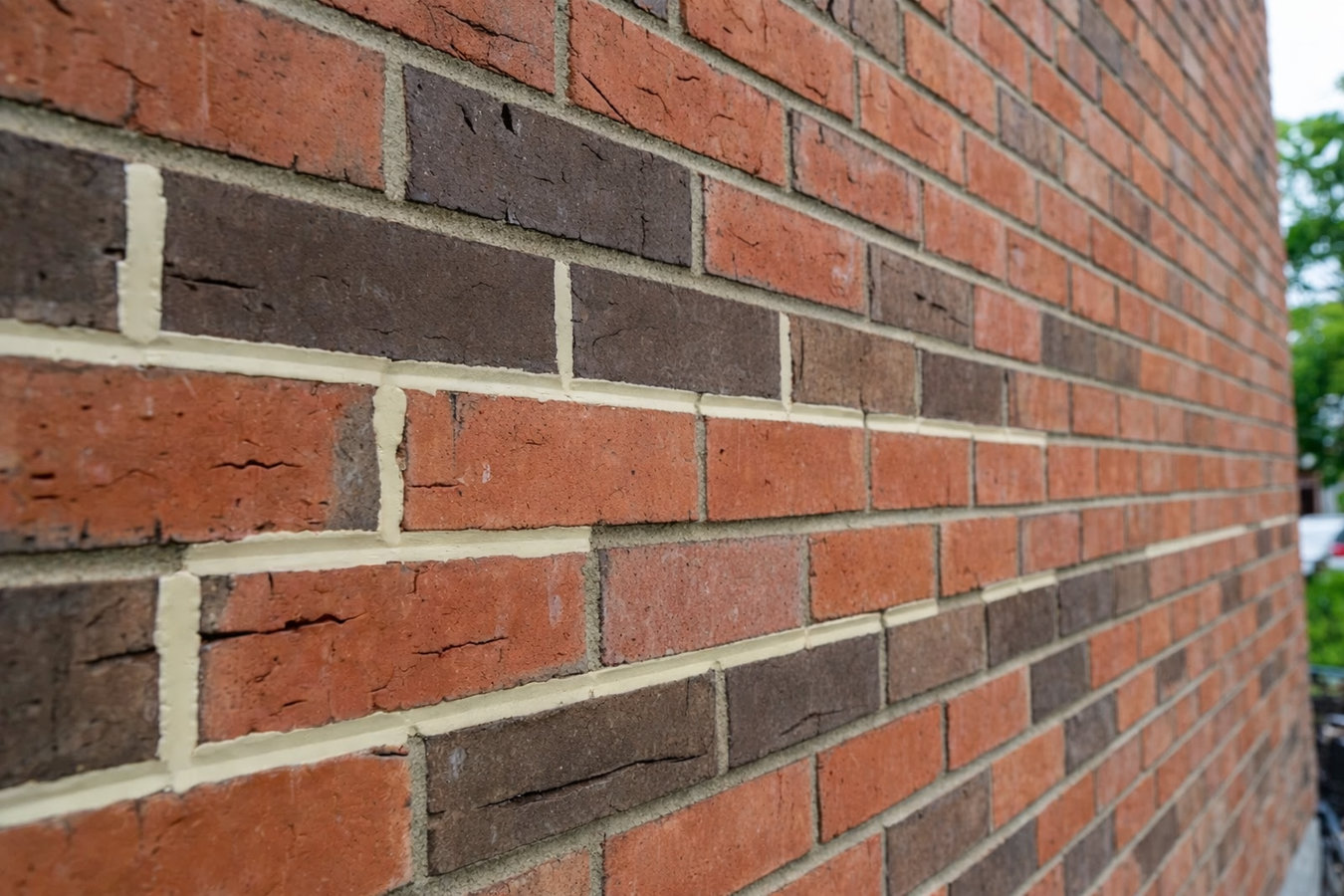
Old mortar lets water in. We remove the crumbling material and pack in a matched mix that keeps moisture out through every Trenton winter.
Old mortar lets water in. We remove the crumbling material and pack in a matched mix that keeps moisture out through every Trenton winter.
Tuckpointing in Trenton means removing old, crumbling mortar from the joints between your bricks and replacing it with a fresh, matched mix - most jobs on a chimney or a front wall section take one to two days and cost under $2,500.
If your home was built before 1950 - which covers most of Trenton - the original mortar has been through a lot of winters. Once it breaks down, water gets into the joints, freezes, and pushes the wall apart from the inside. Tuckpointing stops that cycle before it reaches the bricks themselves. If you are also seeing damaged bricks, our brick repair service can handle both problems in one visit.
The work is done joint by joint, by hand, which is why it takes skill and the right mortar mix. A crew that uses the wrong, too-hard mortar on an older Trenton row house can cause more damage than the original problem. We match the mix to your home.
Run your thumb firmly along a few mortar joints. Healthy mortar feels like concrete - hard and solid. If it flakes off or leaves powder on your finger, it has broken down and is no longer keeping water out. This is the clearest sign that tuckpointing is overdue.
Stand back from your wall. If you can see dark lines, gaps, or missing sections where mortar should be, water is already getting in. In Trenton's winters, that moisture freezes with every cold snap and makes the gap wider each season you wait.
A chalky white residue - called efflorescence - means water is moving through your wall and leaving mineral deposits behind as it dries. In Trenton's older brick row houses, this often shows up on north-facing walls after a hard winter. It almost always means the mortar joints are letting water in.
When mortar fails and water gets behind bricks, the freeze-thaw cycle causes the face of the brick to pop off in thin layers. If you notice bricks that look pitted or peeling at the corners, the mortar has likely been failing for a while. Some bricks may need replacement in addition to mortar work.
We handle tuckpointing on chimneys, foundation walls, exterior brick facades, and interior brick surfaces. Every job starts with removing the old mortar to the proper depth - roughly three-quarters of an inch - using grinders or chisels. We then pack in fresh mortar and tool it to match the profile of your existing joints. For homes with cracked or damaged bricks, we also offer full brick repair so everything gets addressed in one scope of work.
For older Trenton homes where the mortar has completely deteriorated in multiple areas, we also provide brick pointing as a comprehensive repointing treatment. Color matching is included on every job - we assess the existing mortar tone and mix accordingly. You should not end up with joints that look like a patch job.
Ideal for homeowners who notice mortar gaps or crumbling joints at the chimney - a common entry point for water on Trenton row houses.
Suits homes where failing mortar on the foundation wall is allowing moisture into the basement or crawl space.
For front walls and side elevations where deteriorated joints are visible from the street or are causing water damage behind the brick.
Best for homeowners who caught the problem early - isolated joints or small sections that have not yet spread across a full wall.
Trenton sits in a climate zone where temperatures swing above and below freezing repeatedly throughout winter - sometimes several times in a single week. Every time water in a mortar joint freezes, it expands and pushes the joint a little wider. After enough cycles, the mortar crumbles. Trenton homeowners typically need tuckpointing attention more often than homeowners in milder parts of the country. The Delaware River valley also holds moisture, especially in spring and fall, which accelerates joint deterioration on walls that face north or stay in shade.
Most homes in Trenton were built between the 1880s and the 1950s, so the original mortar was often a softer, lime-based mix. We serve neighborhoods from Hamilton to Ewing and know the housing stock across the region well. When a home was built with lime mortar, using a modern Portland cement mix causes the bricks - not the mortar - to crack over time, because the new mix is harder than the old bricks. We assess the existing mortar before mixing anything, so the repair works with your house instead of against it.
Describe what you are seeing - crumbling joints, white staining, or visible gaps. We reply within one business day and schedule a free on-site estimate at your convenience. You do not need to know the technical details.
We walk the exterior, probe the mortar depth, and check the brick condition. For older Trenton homes, we assess the mortar type to plan the right mix. You get a written scope and firm price before any work is scheduled.
The crew uses grinders or chisels to remove old mortar to the correct depth - roughly three-quarters of an inch. Fresh mortar is then packed in layers and tooled to match the original joint profile. Expect noise and some dust around the work area.
Fresh mortar needs 24 to 48 hours before it can get wet, and about a week to reach full strength. We walk the job with you before leaving so you can confirm the finished joints are clean and uniform, with no mortar smeared on the brick faces.
Free estimate, written scope, no pressure. We reply within one business day.
(609) 913-9756Older Trenton row houses need a softer, lime-based mortar mix - not modern Portland cement. We assess the existing mortar before mixing anything, so the new material is compatible with your bricks and the repair does not cause cracking down the road.
New Jersey requires home improvement contractors to register with the Division of Consumer Affairs before working on residential properties. You can verify our registration on the state's public database at any time - it gives you real legal protections that you simply do not have with an unregistered crew.
We have worked on brick homes throughout Trenton's neighborhoods, from Chambersburg to Mill Hill, and understand the housing stock here. Local knowledge means accurate estimates and no surprises once the work starts.
You get a written estimate that breaks down exactly what is being done and what it costs. If something unexpected comes up during the job, we stop and talk to you before proceeding. No surprises on the final invoice.
Tuckpointing done right protects your home for 25 to 30 years. Done wrong, it can damage the very bricks it was meant to protect. That difference comes down to the mortar mix, the preparation, and the skill of the crew. The Brick Industry Association sets the technical standards for this work, and we follow them on every job.
When crumbling mortar has already damaged the bricks themselves, we replace cracked and spalled bricks alongside the mortar repair.
Learn MoreA comprehensive repointing treatment for walls where mortar has deteriorated across multiple sections, not just in isolated spots.
Learn MoreCall us today or submit a request online - free estimates, written scope, and no pressure. The sooner we look, the smaller the repair.